无耻家庭
GT Voice: Backlash against US export licensing shows futility of containing China_我的网站

A |
Trade File photo: VCG
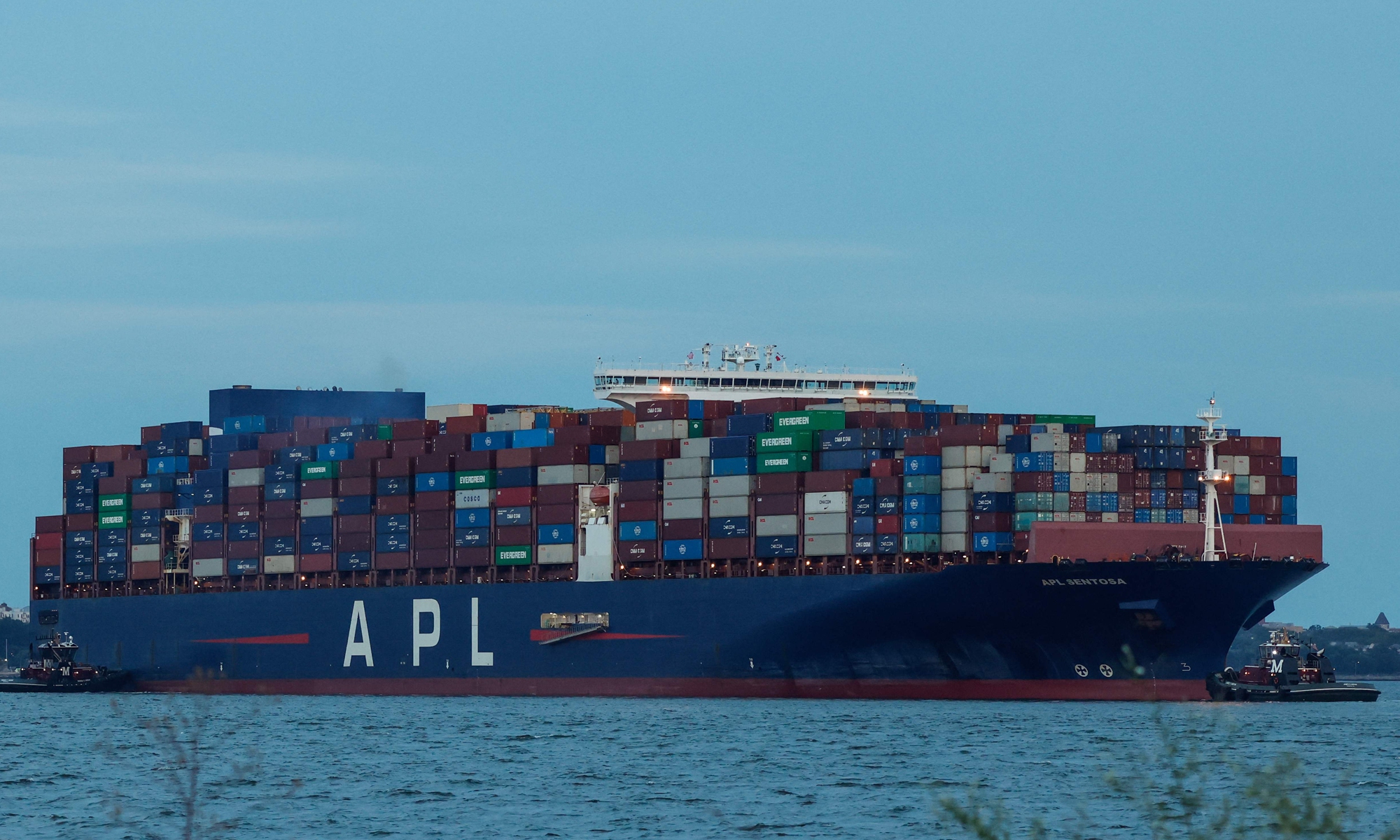
Months-long American export license delays are costing the US billions in exports and eroding American market share globally, the US-China Business Council (USCBC) said in a flash survey released on Tuesday.
The survey noted that poorly calibrated US export controls weaken American companies in China, ceding market share to foreign competitors while reducing the profits available for research and development (R&D).
Designed originally to safeguard national security and serve legitimate foreign policy interests, the US export licensing system has become increasingly politicized, gradually turning into a political tool that obstructs normal economic and trade exchanges. The USCBC survey serves as a stark reminder of how such overreach has backfired on American companies.
In recent years, US politicians have clung to the misplaced belief that restricting exports of advanced goods and core technologies would slow the upgrading of China's tech industry and secure America's technological supremacy. Yet, they overestimated their leverage, while grossly underestimating the developmental resilience that China has built over decades of growth.
Today's China is no longer a passive follower or technology importer. Instead, it has grown into a robust innovation powerhouse with complete industrial chains and strong endogenous driving forces in numerous key technological sectors. Rather than stifling China's technological progress, America's escalating containment measures have only forced China to accelerate industrial upgrading and supply chain optimization.
In the meantime, while US politicians have been indulging in the illusion of building a "tech wall" through licensing restrictions, the self-inflicted damage to the US has grown increasingly impossible to ignore. Reuters reported in August 2025 that thousands of license applications by US companies to export goods and technology around the globe, including to China, were in limbo because turmoil at the agency in charge of approving them had left it nearly paralyzed.
The USCBC survey also listed license delays as the most common challenge identified by 95 percent of companies. For items bound for Chinese customers, two-thirds of companies have had licenses pending for at least three months, exceeding the US Commerce Department's statutory requirements to process applications within 90 days, and 31 percent have had licenses pending for one to two years.
As a result, American tech companies can only watch helplessly as orders that once belonged to them flow to suppliers in other countries. These licensing delays not only impose administrative costs far exceeding expectations, but also severely disrupt normal cross‑border commerce. From semiconductor components to high‑end industrial materials, and from aerospace ancillary products to cutting‑edge research instruments, countless routine trade transactions have been artificially severed. The market advantages that US firms took years to forge is being eroded by the very policies meant to protect them.
From a deeper economic perspective, the export licensing system is particularly lethal to America's innovation ecosystem. Usually, companies allocate a significant portion of their revenue to R&D and technological innovation. However, if the products resulting from these investments cannot be sold in a major market, investment returns will be affected, and the incentive for companies to continue investing in innovation will be undermined. As underscored by the USCBC survey, the export licensing regime diminishes America's ability to innovate and undermines US economic security.
In trying to contain China's industrial rise, the US has ended up undermining its own interests, laying bare the fundamental divide between two development paths. On one hand, the US attempts to fragment global industrial chains through administrative intervention, trade barriers and technological "decoupling" to sustain its dominant position. Yet, such obstructive practices only undermine the competitiveness of domestic industries and weaken America's own innovative vitality.
On the other side, China adheres to high-standard opening-up and win-win cooperation. By continuously opening its vast domestic market and providing foreign companies with a stable business environment, China has built a mutually beneficial global industrial collaboration network. China understands that genuine competitiveness comes from sustained independent innovation, sophisticated industrial supporting systems and market vitality. Precisely because China has chosen to expand openness and deepen cooperation, it has demonstrated remarkable resilience in the face of external containment and constructed a globally integrated supply network.
。
目前,西北太平洋和南海海域正在上演着“四台共舞”,今年第18号台风“沙德尔”、第19号台风“紫檀”和第20号台风“简拉维”、第21号台风“艾莎尼”同时活跃。气象数据统计显示,今年,西北太平洋和南海已有21个台风生成,较历史同期偏多9个。 随着今年第21号台风“艾莎尼”的生成,气象专家介绍,它可能与台风“沙德尔”产生互旋,并为台风“沙德尔”提供更多水汽,成为影响“沙德尔”进入东海后的路径和强度的重要因素之一。 受厄尔尼诺影响 今年台风生成偏多
为什么今年台风这么多?气象专家介绍,这与当前的厄尔尼诺状态密切相关。

在厄尔尼诺背景下,容易导致大西洋飓风生成受到抑制、个数偏少,但西太平洋的台风活动则会更加活跃。从目前台风生成个数来看,符合厄尔尼诺年的台风活动特点。 台风影响持续 无明显间歇期
中央气象台预计,四个台风对我国华东和华南地区的影响是一个连续过程,无明显间歇期。专家建议要警惕持续强降雨引发的次生灾害及风雨叠加效应。

台风“紫檀”影响时间长、范围广,部分地区可能因强降水导致山洪、泥石流、滑坡及城市内涝、农田渍涝等灾害,需提前做好防御准备。

B | “沙德尔”未来将正面影响我国华东沿海地区,强度较强、致灾风险高。请公众及时关注中央气象台发布的台风预警信息,做好相关防御准备工作。 (总台央视记者 吴薇)。
Current article:http://2a9.diaoengngtengdiachanpiezao.sbs/9t6i88u/shl.html
Published on:20:54:50

 预计2026年发布 采用全新内饰材料 全新宝马i3/iM3配置和生产规划
 募资额、净利润超长鑫科技!长江存储IPO获受理 受益股曝光
 美国1600万家庭在互联网上观看电视:8年内增长48%
 《湮灭之潮》全新剧情预告 女主新形象曝光
 报告预计:今年我国粮食和重要农产品供给能力将持续增强
 घर आई मीडिया पर क्यों गुस्साईं Sunita Ahuja? तलाक की खबरों के बीच पति Govinda संग किया गणपति का स्वागत
 All Investments Are Fully Cleared: The Raja Saab Producer
 借助资料走近鲁迅 感受“大先生”民族魂——顺义区小学语文六年级基础研修活动在西辛小学教育集团顺利举行


